(English translation of the Hebrew article in Ynet)
 “Young Settlement” is a cover name used to obscure the settler
movement’s construction of ten illegal outposts a year. These masters of the land understand, without a doubt,
that there is no problem in breaking the law, and the results of this understanding are evident in their
demonstrations.
“Young Settlement” is a cover name used to obscure the settler
movement’s construction of ten illegal outposts a year. These masters of the land understand, without a doubt,
that there is no problem in breaking the law, and the results of this understanding are evident in their
demonstrations.
For about two weeks now, the Hilltop Youth have been raging without restraint and the government remains silent. Why? Because above every rolled-over police car, bleeding policeman and shattered glass shines the headline “Young Settlement.”
 In response to a series of actions taken by the Netanyahu-Gantz
government in recent weeks, including home demolitions, forced evictions and new settlement approvals in Givat
Hamatos and E-1 meant to secure “facts on the ground” and prevent the successful pursuit of a two-state future
for Israelis and Palestinians, the Progressive Israel Network, in which APN is a member, issued the following
statement:
In response to a series of actions taken by the Netanyahu-Gantz
government in recent weeks, including home demolitions, forced evictions and new settlement approvals in Givat
Hamatos and E-1 meant to secure “facts on the ground” and prevent the successful pursuit of a two-state future
for Israelis and Palestinians, the Progressive Israel Network, in which APN is a member, issued the following
statement:
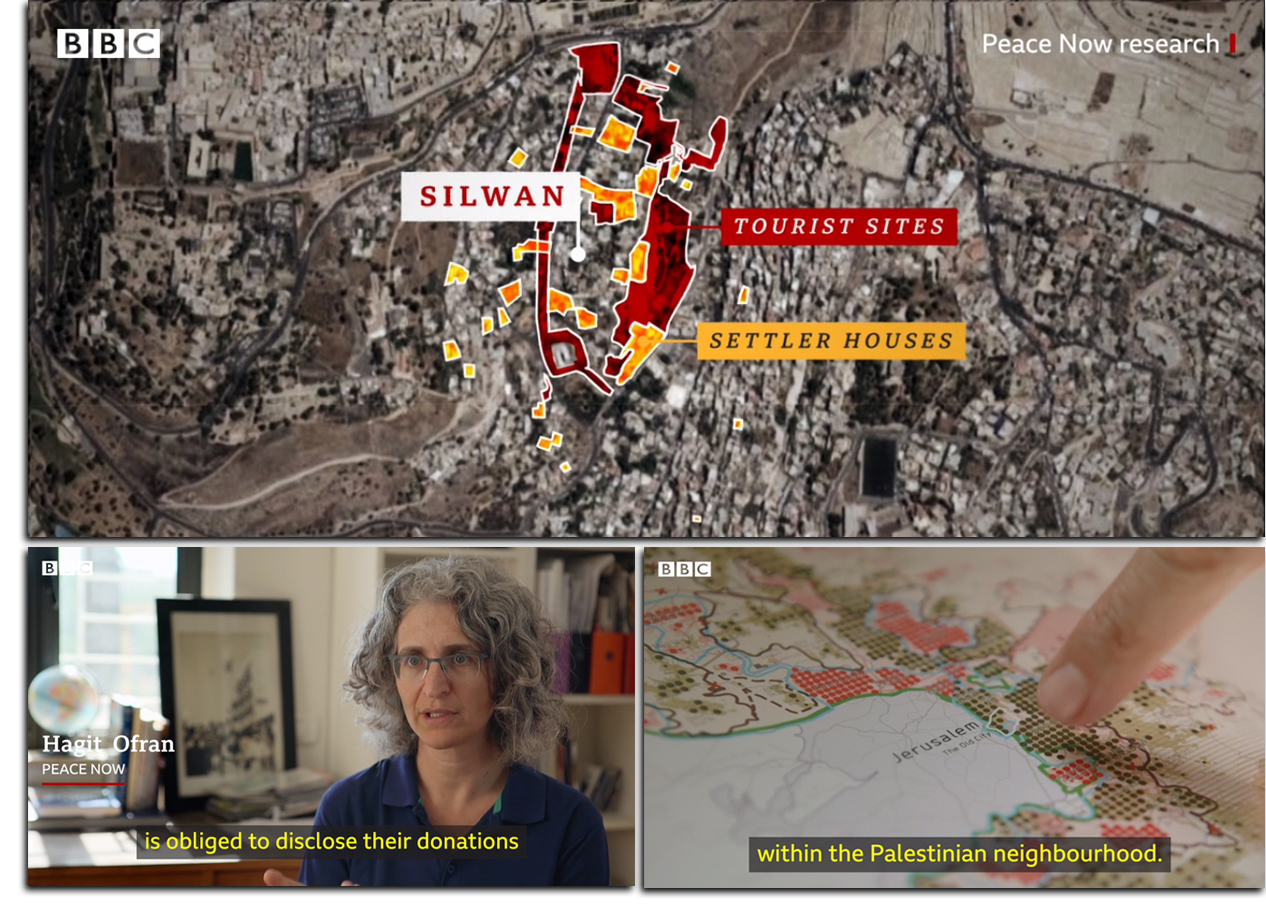 A BBC News investigation has disclosed that Russian oligarch
 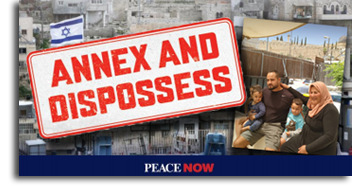 A new report by Peace Now’s Settlement Watch team looks at Israel's
application of the "Absentees' Property Law." This law is used to evict and/or restrict Palestinians from living
in their East Jerusalem properties in area annexed by Israel after the war in 1967.
A new report by Peace Now’s Settlement Watch team looks at Israel's
application of the "Absentees' Property Law." This law is used to evict and/or restrict Palestinians from living
in their East Jerusalem properties in area annexed by Israel after the war in 1967.

 Go
Go